
Travel: Falconry in Dubai

Photo: Shyam Krishnamurthy

The sun is beating down hard on us when we arrive – a motley group of tourists from across the world – to watch a falconry display in Dubai late one afternoon. We’re on the edge of a vast expanse of open desert, smoothly undulating sand dunes as far as we can see. The setting couldn’t be more perfect.

But I’m feeling rather cynical, jaundiced really, after the camel ride we’d just been fobbed off with. The horsey ride I took on the Marina as a four-year-old was longer and more thrilling, and when (like said four-year-old) I’d tried to wheedle for a longer ride, I’d been denied with a firm ‘Yalla!’ by the Arab in charge.

Still, I wait patiently. After all, falconry in the U.A.E. is supposed to be something special, an ancient tradition that has morphed into a modern sport patronised by the rich and the powerful of the land. The falcons and their falconer arrive in a smart white four-wheel-drive vehicle, and I’m mildly disappointed as they dismount. I’d vaguely assumed that the birds would be bigger (I’d been picturing something more majestic, along the lines of a Bald Eagle), and their falconer would look more fierce.

Instead a slim, unassuming-looking young man in blinding white traditional garb goes about setting up his paraphernalia expressionlessly. The falcons – they’re Peregrines, I later find out – are tethered to a perch in the sand, with a delicately ornamental hood covering their eyes (it seems cruel to me that they’re blinded, until I find out that it’s needed to allow the birds to adjust their powerful vision to the new surroundings).

Still, with no change in expression, the falconer gets one of the birds to perch on his arm (covered with a cushiony cuff), and the tourists promptly erupt in a volley of photo-clicking. The bird is then transferred onto the arms of the more intrepid visitors and there’s even more picture-taking. After about 20 minutes of this, I’m convinced that the gentleman is soon going to pack up and leave, and if I asked for more, I’d get a stern ‘Yalla!’

Boy, am I wrong. Because once the pictures are taken, the real show begins. Out of an old bag comes a hapless pigeon tied to a long rope (the prey, I realise in a dawning mix of horror and awe), and one of the falcons is released from its hold, its hood removed. With a single shout, the falconer swings the pigeon into the air, and the falcon takes to flight. Swooping through the air, gliding and diving, the falcon suddenly doesn’t seem that small. Suddenly, it’s just as majestic as I’d imagined it would be.

Now begins a cat-and-mouse game between the falcon and the falconer, as they recreate the age-old chase of predator and prey, the pigeon swinging just out of the reach of the falcon each time it nears. Centuries ago, the Bedouins captured and trained these falcons to hunt for meat that would supplement their diet of dates and camel milk. Today, the falconer might be merely putting on a show for a group of tourists who ‘ooh’ and ‘ahhh’ with each swoop of the bird; but, I realise, some things are unchanged. Such as the intensity of the falcon’s attack, as it pounces, withdraws, re-assesses the situation and swoops down again in increasingly aggressive motions; and the skill and training of the falconer, as he matches wits with the predatory bird.

It’s like an airborne bull-fight, between the falconer who swings the prey away in increasingly wide loops, and the hungry falcon bearing down upon him. It’s fascinating, a little scary and borderline cruel, especially when the victorious falcon is tethered again after getting just a couple of pecks at the pigeon. Now falcon number two is released, and it becomes clear very early that this one isn’t following the script. It’s bigger, more ornery and less in control, and swerves dangerously close to the watching group of tourists a few times.

Turns out it’s because this one is newer to training although it’s older by six months (they’re both females, I’m told, and the first is just a year old). How long does it take to train them? I ask our laconic falconer later. He shrugs. “It depends on the brain of the falcon,” he says in his heavily-accented English, tapping his head. “Sometimes, a week is enough. Sometimes months.”

When the show is done (the second one brought to heel by our ever-calm falconer), the falcons are cooled down with water, and then, finally, allowed to have at the pigeon. As a group of delighted little kids watch (with gleeful shouts of ‘Ewwww gross!’), they rip into the pigeon in a National Geographic-style moment that’s both impossible to turn away from and faintly nauseating to watch.

The whole thing really is quite an adrenaline rush, and this is just the tame, touristy version of the sport. Definitely better than the camel ride. Yalla!

Leave a comment

Filed under Articles, Travel

How to… be a packrat

1.    Being a packrat takes some serious dedication. No item is too small or too frivolous to be packed away “in case it’s needed in the future”. Cardboard boxes, plastic spoons, old, yellowing magazine clippings, broken hair clips… it doesn’t matter if you can’t immediately think of what they might be needed for. It just matters that they’re there, safely stored in a dusty corner of the storeroom or stashed away in a moth-bally corner of the almarah… just in case.

2.    A packrat often leads an embattled existence in the family, so it’s important to be prepared to fight for your right to store. There’s always that person who’s determined to throw away all the junk you’ve lovingly squirreled away over the years. So whether it’s an old rusty biscuit tin or a wad of wrapping paper, you’ve got to be ready to make a soulful case for a) the emotional value of said object (warning: this one can only take you so far) or b) how the last time you were forced to throw something away, it nearly lead the family to brink of disaster (acute spoon shortage! Wrapping paper emergency before a party! etc).

3.    Sometimes no amount of arguing or emotional blackmail works, and the Family Packrat Nemesis resorts to underhanded tactics such as (gasp!) clearing out the storeroom when you’re away. At such times, dear packrat, it is perfectly all right for the gloves to come off. Whether it’s digging through the trash and dragging your beloved items back into the house, or actually engaging in a less-than-dignified bout of tug-off-war when you catch the Nemesis in the act, no reaction is too over the top for the packrat protecting her territory.

4.    To avert such crisis situations, a packrat must have certain secret locations scattered about the home where the most valuable of the stash can rest safely for evermore. A truly accomplished packrat can hoard to her heart’s content in various forgotten nooks and crannies for years and years without interference, and is only discovered when moving house or re-painting the house or such. (At that point, refer to tips 2 and 3).

5.    Finally, nothing helps the cause of the packrat like being organised. A neat packrat is a packrat who flies under the radar. Granted, it’s hard – there’s so much stuff and only so much time to stash it all away in. But it’s worth investing in compartmentalised plastic boxes, serviceable shoeboxes or smartly labelled cartons in which to sort, stack and store it all. After all, it’s so much easier to defend organised rows of boxes than a rumpled mess of junk. And just think about how much more you can store in the space you save!

4 Comments

Filed under Articles, Humour

How to… be a baby coochie-cooer


1.    ‘Awwww’ is your new best friend. No other expression in the language better expresses just how cute you find the baby / baby pic / baby video before you or the baby anecdote you just heard from a colleague. Make sure to use the inherent versatility of the phrase… a simple tweak of the pitch or tone and you have the perfect response to every coochie-coo-worthy situation. And of course, when faced with the truly, unutterably cute, be sure to elongate: ‘awwwwwwwwwwwwwwwww!’

2.    A true baby-coochie cooer doesn’t wait to just happen upon a cute kid or baby pictures from a friend. Being proactive is a must. If a friend or relative has a cute kid, add them on Facebook immediately, so you have free access to their kiddie pics and can post ‘awwww’ comments at will. If a neighbour (or a friend’s neighbour) has a cute kid, drop in often and ‘awwww’ in person. Just try not to make too much of a pest of yourself (i.e. turning up without any notice at dinner time and refusing to leave till you get a peek at the kid).

3.    We now enter slightly murky ethical territory, so pay close attention. You don’t always need to know the person whose baby you’re coochie-cooing over on social networking sites. That is, babies of friends of friends (or friends of friends of friends) on Facebook are fair game for you to ‘awwwww’ over (not in the comments, of course; that would be creepy considering they don’t know you). Please note: overstepping your bounds on this one may earn you less than flattering titles such as ‘baby stalker’.

4.    When you really, really need your cute-fix, the Internet can provide in other ways. Go on Youtube and you’ll discover legions of fellow baby coochie-cooers posting adorable videos of their tiny tots (ignore the inevitable trolling and flame wars, and focus on the cooing and awww-ing). Then you have websites of baby photographers such as Anne Geddes, and forums created by your baby-crazy brethren. (Just make sure you take a break often enough to avoid Carpal Tunnel Syndrome and/or Cuteness Overload.)

5.    Finally, every baby coochie-cooer needs a real-life support group. By this I mean people around you who keep you regularly supplied with baby anecdotes and pictures (of their kids or their friend’s kids and so on, saving you some of that sneaking around on Facebook). Plus they join you in all the ‘awww-ing’, which is always most fun when enjoyed with fellow baby-coochie-cooers.

2 Comments

Filed under Humour

Book Launch: Jeffrey Archer’s ‘Only Time Will Tell’

And he’s back. Jeffrey Archer’s visits to the city have practically become an annual tradition now. For the third time in three and a half years, the British best-selling author returned in Chennai to meet his adoring fans, and, of course, to promote his latest offering.

“I’ll be travelling to five cities in six days, and I did 11 interviews just today,” said Archer, as he took the stage at Odyssey at Express Avenue Mall. “It’s non-stop work from plane to plane, but it’s worth it – I’ve just been told the book’s gone to number one on the bestseller list. This is why I love coming to India again and again.”

You really can’t blame the guy. Not only is this the country where he has the single largest readership, it’s also probably the only place on earth where the author with a somewhat murky past gets a standing ovation when he strides onstage like an aging, bespectacled rockstar. The crowd at Odyssey was somewhat smaller than that of the previous years’ events held at Landmark – there were actually empty seats at the start – but it did grow by the end, so Archer could say with some satisfaction before the book signing, “Look how many people there are!”

The book in question this year is ‘Only Time Will Tell’, the first of the five-part series, ‘The Clifton Chronicles’ that spans a hundred years from 1920 to 2020, and traces the life of Harry Clifton and the mystery surrounding his father’s death.

“This first book follows Harry’s life from his birth in the docklands of Bristol in 1920 up until 1940, when he has to decide whether he’d go to Oxford or to the war,” said Archer. “It’s only been out three days, but I’m sure some of you would have already read it; people in India are so fast, it’s frightening.”

The evening was full of such asides – how quick people are in India, how many aspiring writers there are (“only in India will all the hands go up when you ask that question”), and how many young writers have already written a novel (a 14 year old girl in this case, which Archer called ‘typical’). Once he was up on stage, he was fond, benign old Uncle Archer, completely in charge and holding forth on writing tips, mock-scolding the audience, and generally having them eating out of his hand.

However, what did come across as truly genuine was his gratitude for the reception he gets here, and he patiently responded to all the questions he was asked, whether it was about his writing routine (he’s up by 5.30 a.m. and writes for eight hours a day with breaks every two hours) or his exercise routine (he has a personal trainer from New Zealand – “I can drop and do 25 press ups right now.”) He revealed that Columbia Pictures has sent him the script for the movie adaptation of his previous novel, ‘Paths of Glory’, but that he was afraid to read it (“I’m dreading not liking the script and feeling it could have been so much better”), and that he wouldn’t be writing a book on vampires any time soon, “though I’m told they’re in”.

The event ended the way his launches always do – with a throng of autograph seekers surrounding him. “I was mobbed back in Mumbai,” he said, trying to organise the crowd better here; but you got the feeling he probably wouldn’t mind being mobbed – at least a little – again.

Leave a comment

Filed under Articles, Books, Madras

Author interview: C.P. Belliappa (‘Victoria Gowramma – The Lost Princess of Coorg’)

In a quiet corner of the Brompton Cemetery in London lies a 19th century grave partially covered by the undergrowth. The graceful stone cross above it is slightly broken, but the epitaph composed by Queen Victoria can still be read: “Sacred to the memory of the Princess Victoria Gouramma (sic), daughter of the ex-Raja of Coorg…”

That’s where the strange and tragic tale of Victoria Gowramma, the princess from Coorg who was raised Christian and became Queen Victoria’s goddaughter, ended in 1864. But her story has come to light again in all its fascinating detail thanks to C.P. Belliappa’s rigorously researched book ‘Victoria Gowramma: The Lost Princess of Coorg’, which was recently launched in the city.

“Historical writings on Coorg – mostly gazetteers by the British who lived there during the 19th century – mention the story of Gowramma and her father, the exiled Raja Veerarajendra in a paragraph or two,” says Belliappa, author of ‘Tale of a Tiger’s Tail & Other Yarns from Coorg’ and ‘Nuggets from Coorg History’. “But the details were never there, and I got more and more inquisitive.”

His big break came when he accidentally stumbled upon three books written in the 19th century by people who know both the raja and his daughter. “I was able to download them – for free! – from www.archive.org, where old books are digitised and uploaded,” he said. “They were authentic, firsthand accounts, and comprised 75 per cent of the information I needed.”

The rest he found from the digital archives of the Times London – reports of court functions and events that contained all sorts of interesting titbits of information.

‘Victoria Gowramma…’ traces the intriguing series of events surrounding the princess’ journey to England with her father in 1852, and her difficult and often lonely life there subsequently. The various threads include the exiled raja’s attempts to reclaim the wealth the British took from him (his reason for taking Gowramma to England in the first place), and the grand plans by Queen Victoria to match-make between Gowramma and another young royal convert to Christianity, Maharaja Duleep Singh of Punjab.

“Queen Victoria believed that if two royals converted to Christianity were married, and their children were born Christian, it would encourage more of their subjects to convert,’ says Belliappa. “What’s interesting is that although the plan didn’t work, the queen continued to be fond of Gowramma to the very end.”

The book, then, is more than just a portrait of a princess; it gives you a glimpse into the political and religious power dynamics of the time. With its wealth of primary sources, it’s a solid historical work, though Belliappa admits that he was very tempted to go the historical fiction route. “I gave it a lot of thought, and decided finally that the facts themselves were so sensational that they didn’t need fictionalising,” he says.

Since the book’s release in England last year, the author has uncovered even more interesting nuggets of information – for instance, after a bit of detective work, he’s discovered that direct descendants of Gowramma live on to this day in Australia.

“I have enough material to add at least an epilogue in future editions of the book,” he says. “It’s been a very exciting time.”

13 Comments

Filed under Articles, Books, Madras

How to… be a pop-culture junkie

  1. Be obsessive: You don’t just watch popular TV shows, movies, etc.; you immerse yourself in them. You notice and catalogue every detail and flaw (and rant about every tiny inaccuracy). You memorise entire segments of dialogue and own the soundtrack (no matter how obscure). You analyse every plot point and debate casting decisions as though you were producer or director. In short – embrace geekiness.
  2. Be proactive: A true pop-culture junkie doesn’t wait until the latest episodes of his favourite TV show eventually trickle into Indian channels (a six month lag? Shudder!). Or until a movie he’s been obsessing about for the past year comes to Indian theatres (possibly never). Online downloads are your new best friend. And if all else fails, there’s always a fellow geek in the U.S. or France or Turkey who can be your DVD supplier (thank god for eBay and Amazon.)
  3. Be argumentative: Cultivate strong opinions and then air them on online communities, forums and blogs dedicated to the icon/show/movie/book in question. Argue incessantly, incite flame wars, form rival factions and inevitably, splinter communities (with yourself as the supreme commander and moderator, of course). Remember, anyone who doesn’t agree with you is a troll.
  4. Be creative: Contrary to popular perception, pop-culture junkies don’t merely consume, eyes glazed over and brain disengaged. Apart from the long, rambling analyses and the intense arguments online (see above), there’s also the somewhat shadowy world of fan fiction (where rabid fans write their own stories based on the characters from a particular show/movie/book etc.). And then there’s fan art. And fan videos. And… you get the drift.
  5. Finally, spend, spend, spend. Whether it’s sci-fi movie memorabilia or classic movie posters or limited edition action figures or anniversary edition special disc sets, you’ve got to own them. They’re your badge of honour. Your point of pride. Fellow junkies judge your worth by them. Newbies worship you for them. You must bid obsessively on eBay; you must covet and collect and display with pride. It’s the price to pay for true junkie-hood.

Leave a comment

Filed under Articles, Humour

Interview with… R. Seshasayee

Pic: R. Ravindran

This interview almost didn’t happen. You see, R. Seshasayee has never — in all his years as one of Chennai’s most respected corporate leaders — given a purely personal interview, one not about his vast experience and knowledge of the automobile industry, but about his other interests and dimensions, his charitable work, his artistic talents and his philosophy towards life. And this interview request too, like others, was on the verge of being politely turned down.

“Then my wife gave me a talking to for 15 minutes,” says the long-time managing director of Ashok Leyland with a smile when we finally do meet. “I said I didn’t feel comfortable talking about myself, and she said, ‘Most people know you from just one angle, and it’s time you changed that!’”

That angle is, of course, his role as a visionary leader at Leyland for the last three decades (he’s been MD since 1998), and his high-profile participation in organisations such as the Confederation of Indian Industry (CII) and the Society of Indian Automobile Manufacturers (SIAM) (he’s served as president of both).

But here’s something you probably didn’t know. He’s also an artist who has done portraits and magazine illustrations, a Tamil writer and poet, and a lover of Carnatic music who trained under Maharajapuram Santhanam. And that’s just the beginning.

“I’ve always believed that every person has many desires and talents, and that it’s necessary to develop them all to be holistic,” he says. “There must be one anchoring interest, of course, a central calling in your life, but it’s perfectly feasible to be many things.”

He gained this perspective from his multi-faceted parents — his father, M.S. Ramaswamy, who’s a lawyer, a musicologist, a tennis player, and an entrepreneur, and his mother, Vasumathi Ramaswamy, a well-known Tamil writer and novelist, a social activist and an orator. “Growing up watching them, it was natural to pursue different interests,” he says.

So during his college years, he painted cinema posters (“we worked on huge banners — it was a very laborious process”) and was the staff artist for the short-lived magazine, Mala. “In fact, in my early years, I didn’t think of being a chartered accountant or an engineer, just an artist,” he says. (He eventually did go on to become a chartered accountant.)

He also, fascinatingly, was a ghost-writer for his mother towards the tail-end of her career, he reveals: “This is not to take away anything from her — she wrote several hundred short stories, novels and essays — but at that time, she was unwell and struggling to meet deadlines, so I’d finish stories or rewrite them for her.”

Once, for instance, he wrote the next instalment of a radio serial she was working on while he was travelling from Madras to Tuticorin by train for an audit of a food corporation. “I finished when I reached and posted it straight to AIR… She never even had a chance to read it before it went on air!” he laughs.

Today, he still paints and writes Tamil poetry in his spare time, though, he says with a smile, they’re not for the public eye. His active involvement with Carnatic music too came to a halt with the untimely passing of Santhanam, but he retains his interest and thirst for knowledge on the subject. “I definitely want to do an M.A. in Music, when I find the time,” he says.

Time is something Seshasayee seems to have a special relationship with. Apart from his demanding career, he finds time to be involved with 17 — yes, 17 — different organisations, including charitable organisations such as SCARF and the Indian Cancer Institute, and educational institutions such as the Indian Institute of Information Technology (IIIT).

“Thinking about what you can do to touch as many people and institutions as you possibly can is part of living holistically,” he says. “We don’t function as individuals in isolation; it’s important to get connected with our society, our world.”

Ask him how he manages to do it all, and he laughs, “I get asked that often. But, you can be very productive if you think through all your actions in a focused way; that way you don’t waste any time.”

His reaction to his upcoming move at Leyland from managing director to executive vice-chairman (from April) is similarly clear-headed. “It’s necessary for the sake of the organisation to have a succession,” he says. “The next generation is coming up and we must make space for them.”

It’s all part of the larger evolution of his life, as he puts it: “You have to constantly ask yourself — where do I find joy next?”

For a man as multi-faceted as him, the answer could lie in one of many, many things.

BOX:

While at Vivekanada College, he was an active leader in student politics.

One of his greatest ambitions when he was younger was to make a movie someday.

He is a gifted orator, with a talent for extempore speaking.

He enjoys reading Bharathiar’s poetry.

1 Comment

Filed under Articles, Madras, People

Book launch: Rahul Bhattacharya’s ‘The Sly Company of People Who Care’

Much like the book itself, the launch event of ‘The Sly Company of People Who Care’ by Rahul Bhattacharya was all about the Caribbean nation of Guyana – its people, its language and dialect, its colonial history and racial politics, and its decaying wooden splendour.

“It’s such a raw-ly beautiful country, with its red rivers and rainforests,” said Bhattacharya, in conversation with journalist and author Samanth Subramanian at Landmark. “I felt an instant affinity to its colours and dialects – it was so different from anything I’d experienced before.”

Delhi-based Bhattacharya is best known for his work on cricinfo.com and for his popular cricket book ‘Pundits from Pakistan’. ‘The Sly Company…’ is his debut novel and was also, in a sense, was born out of cricket.

“I was on my first international cricket tour to the West Indies, and my first port of call was Guyana,” he recalled. “It was a very boring week of test cricket – it always rains there during matches – but my affinity for the place stayed with me, and I decided to follow that feeling nearly four years later.”

He ended up spending a year there – unusual, to say the least. “No one goes to Guyana,” he said laughing. “Everyone flees Guyana – it’s such a desperate, struggling place.”

But it’s also a fascinating place, with its volatile racial mix of Africans, Indians, Chinese, and Portuguese, its grid of canals and trenches, and its sagging wooden houses with zinc roofs built by the Dutch. “I knew I’d write a book on it, but I didn’t what that book would be,” said Bhattacharya.

The book eventually took the shape of a novel (“I’d start with facts and then tell a whole lot of lies”), but the author still struggled with the non-fiction elements he needed to include.

“So few in India know the historical context of Guyana – how it was created entirely by colonial powers who brought in slaves and indentured labourers, and how its reality is shaped by what happened once the colonial powers left,” he said. “I had to reconcile these non-fictional elements with the storytelling – that was challenging.”

‘The Sly Company…’ tells the story of a young man from India who goes to Guyana in search of escape from ‘the deadness of life’, and embarks on an adventure with Baby, a diamond hunter. Slow paced and filled with dialogue in Guyanese dialect, the book isn’t always easy to read. But it did come alive during a long, dramatised reading by the author, who did a remarkable job in re-creating the distinctive rhythms of Guyanese speech (“I became quite good at it; people could mistake me for Guyanese by the end!”).

“When I came back, the dialect was bouncing in my head so hard – the vivid phrases and the very visual way of speaking were addictive,” he said. “A lot of the narrative in the book was in that style initially; I had to be reined in by my editor who felt it would be incomprehensible to readers.”

Naturally, much of the q-and-a session that followed focused on race and politics in Guyana. The turnout at the launch might have been small, but those present walked away with a deeper understanding of the Caribbean nation.

9 Comments

Filed under Articles, Books, People

Author interview: Rudra Krishna (‘The Onus of Karma’)

His novel ‘The Onus of Karma’ may have just been released recently, but Rudra Krishna started writing the story a long, long time ago. At the age of 12, to be precise.

“It was the first story I ever wanted to tell,” says the 28-year-old author about the fantasy adventure novel. “But every time I started, I felt I was writing pure drivel. I really struggled to find my style.”

Fast forward 10-odd years to 2006, and Rudra was ready to tackle the story once more. And this time, he meant business. “I finally had the style down, the plot mapped out and the research done, and when I sat down to write, I finished it in seven weeks,” he says. “I guess it had been fermenting in my mind a while!”

So what was so special about this story? Well, it’s based on the legend of a swashbuckling ancestor of Rudra’s – his great-great-great-great-grandfather (“I’ve lost track of the number of ‘greats’,” he jokes), Tharuppukal Ramaswami Aiyar, a fearless bounty hunter who turned his back on tradition and ended up making the family fortune.

“He was the last of seven children in a family of purohits, who decided he didn’t want to be a priest, and trained in sword-fighting, archery and martial arts instead,” says Rudra. “He ran away at the age of 17, and famously captured the feared dacoit Arunachalam. He was a total free spirit –he just disappeared one day at the age of 38 or 39 and was never seen again.”

Around this fascinating ancestor, Rudra has spun a tale of mysticism and intrigue, involving the Sri Chakra, the divine wheel of awesome power given to man by Lord Shiva, and historical figures such as Haider Ali and Lord Hastings.

“The bits about the chakra are all fantasy, of course, but the historical facts are entirely accurate,” says Rudra, a Masters in law from Cardiff who now edits legal books. “My mother, Dr. Nandita Krishna helped with all the research – she read a few hundred books for a year.”

‘The Onus…’ – which touches upon issues of caste, class, religion and race – has managed to ruffle quite a few feathers since its release. “I never meant to hurt anybody but I’ve managed to offend everyone from old Mylaporeans (including my extended family) to my English and Muslim friends,” says Rudra ruefully. “But as long as I’ve offended everyone equally, I guess I’ll doing all right!”

In fact, he’s quite happy to have gotten people talking about some of these sensitive issues. “These are real problems and too many people pussyfoot around them,” says Rudra, a non-conformist who has, at various points, been a heavy metal musician, a poet, a supervisor in a construction site, a factory worker and an English teacher.

His next few books (he’s working on seven novels at the moment) are likely to ruffle more feathers still – coming next year, for instance, is “There’s a Jihadi in My Curry”, a contemporary comedy based on his friendship with a Pakistani in the U.K.

“That one is extremely politically incorrect too,” says Rudra. “My goal isn’t to tell people what to think but to give them something to think about. Sometimes a slap in the face isn’t a bad thing.”

His renegade ancestor would certainly have approved.

Leave a comment

Filed under Articles, Books, People

The Great Pink Scooty Mystery

There’s a strange trend I’ve observed on our roads for some time now. I don’t know you if you’ve noticed it too. But everywhere I look, I see balding middle-aged men on Barbie-pink Scootys or their equally girly violet counterparts. The roads are filled with them. They seem to be all around me. It wouldn’t be an exaggeration to say that I’ve seen more greying, pot-bellied gentlemen riding these scooters than the young women the two-wheelers are apparently targeted at. (This is not me gender stereotyping. I know for a fact that young girls are supposed to want these scooters from those ads of Priyanka Chopra/Preity Zinta driving around on them, hoodwinking silly men and basically going ‘Woot woot! Girl power means pink bikes!” or words to that effect).
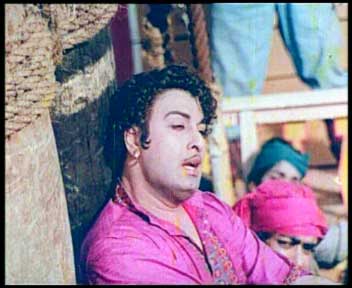
So how do we explain this phenomenon? One answer could be that these are old dads and uncles and grandpas borrowing their daughter/niece /granddaughter’s scooter at a pinch. Maybe they live in a middle-income, two-scooter household and some other member of the family (a virulently anti-pink brother, for instance) has made off with the staid grey Activa, leaving said old man with no choice. Could be. Maybe that explains some of the sightings. But I’ve seen too many cases for this to be the sole explanation. I mean, could there really be that many stranded old men in our city going pink against their wishes purely out of desperation? I think not.

Then there’s the look on their faces. I’ve seen men forced into embarrassing situations deemed too ‘feminine’ for them. I know how they react. Like the man forced to be at a sari blouse fitting with his sister. Or the newly-wed husband forced to buy feminine hygiene products for his wife at the local convenience store. Or the man who has to to put on his girlfriend’s fluffy pink bathrobe after a shower. Whatever. The bottom line is, they squirm. They shrink within themselves. They mumble. They fidget. They sweat. And they always, always avoid eye contact. But these old gentlemen, they’re different. They sail past confidently, back ramrod straight, head held high and if you stare, they look you straight in the eye as if to say, “That’s right biatch, I’m ridin’ pink. You got a problem with that?”

I don’t think these fine upstanding gentlemen are on these scooters as a last resort (or as part of some sort of mass expression of latent homosexuality — even Freud would agree that’s somewhat unlikely). No. I think they’re just riding the family scooter, bought by them to be shared with wife and kids and extended family, and that the old guys are proud to be on their shiny pink/purple purchase. And I’ll tell you why.

These grey-haired gents are a product of old India, India in the time of Ramanand Sagar’s Ramayana and the License Raj, India pre-Westernisation and globalisation and all those other big words. They grew up in a time when wearing pink or purple or any other colour of the rainbow didn’t make a man any less of a man (evidence: any of our good old Sambar Westerns or any desi film post the black and white era and pre 1990, for that matter). This was a time when two guys holding hands on the streets didn’t mean they were gay, just best friends forever (and ‘gay’ just meant happy). Gender-specific colour coding was unheard here of back then; it’s really mostly a Western concept — pink for girls and blue for boys and cursed are those who cross the divide! — that’s seeped into Indian society slowly since the economic liberalisation of 1991, along with McDonalds, cable TV, Loreal and Levis jeans.

Not buying the theory? Look out the window and tell me how many guys of age 30 or below you can see riding one of these bubblegum-coloured scooters.

I rest my case.

And I’ll tell you something else. I applaud the old guard for it. I think this colour coding business is silly. I don’t see why, for instance, the toy section for little girls  has to be painted over in a sea of blinding pink (and this coming from a girl who made her room so pink in her teens that her dad felt nauseated stepping in). What I mean is, it’s a choice. If you like bright pink, good for you. Even if you’re a 45 years old and a father of two. That was the M.G.R. way. If you don’t, ditto. I say, good for these guys, sticking with the old way that’s rapidly being lost to us. Like the men who don’t let the safari suit die, the middle-aged male lover of pink lives to fight another day in modern India, through the Scooty Pep. You go guys!

4 Comments

Filed under Humour, Madras, Uncategorized