
Event: China-region energy partnership

Event discusses collaborations on EV charging, health and wellness, and RWA management

A senior delegation from China was recently in Dubai for a series of landmark engagements in order to foster collaboration in sustainable energy and digital innovation between China and the region.

Hosted hand in hand by RS Global Energy, a global energy commodity trading company headquartered in the UAE, and MBME Holdings, a UAE-based investment company focused on technological innovation, together with XCharge, a high-powered Chinese EV charging solutions provider, the event was aimed at building future-oriented partnerships in cutting-edge EV charging and solar infrastructure, health and wellness, and real world asset (RWA) management.

The future of EV charging

A pivotal outcome of the meetings was the joint commitment for XCharge to provide advanced charging station models for promotional installation at select locations, enabling users in the region experience next-generation EV technology firsthand.

“The challenge of the century, and of the next coming years, is the move to green energy,” says Dr Jose Ramos Ferriera, Group Chairman of RS Global Energy (RSGE), which has bases in Lisbon, London, Peru and Brazil, in addition to the UAE. “Last year, we made the decision to join hands with XCharge, one of the best companies in the market, thereby aligning our energy business with the UAE’s sustainability goals for 2030.

“Our target is to bring the best EV charging solutions and related technology to the biggest infrastructures in the region such as ports and airports.”

RSGE is already the sole distributer for XCharge in Europe, and now brings its cutting-edge technology to the Middle East and North Africa. XCharge, a global leader in battery-integrated fast-charging solutions with hubs in Hamburg, Madrid, Texas and Beijing, will unveil its two latest DC-charger station models, the Net Zero, and the C-8 here for the first time in the near future.

Advanced technology

“Global warming has become a very important issue for the world, and solving it is everyone’s responsibility,” says Ma Hongsheng, Chairman, XCharge Beijing, who was part of the delegation. “We have made many important advances in renewable energy systems and diversity of energy resources. Bringing this technology to the Middle East will be a benefit to us all.”

The Net Zero station is unique in that its 223 kWh lithium-ion battery pack can deliver up to a 194 kW of DC charging power while requiring only 44 kW of input. Not only does that mean maximising output while minimising input and reducing its footprint, it also makes these stations amenable to use in areas where grid capacity is limited. In addition, its battery can double its capacity up to 446 kWh, meaning the station can operate even during grid outages or with fluctuating energy demands.

Most importantly, it comes with active thermal cooling, allowing the charging stations to perform optimally even in soaring temperatures.

“This technology is very significant, because we’re seeking to find an answer to the climate challenges in the Middle East,” says Dr Ferriera. “These EV chargers can be configured to operate under the high temperatures of the region.”

A multitude of innovations

EV charging is just one of the areas of focus for RSGE during the meetings with the Chinese delegation. The company, which is a part of the Angola-based Ridge Solutions Group, is also involved in promoting eco-friendly solutions in renewable energy, such as solar infrastructure, and reducing carbon emissions in alignment with global trends towards clean energy.

But RSGE intends to diversify even further in the region, with MBME facilitating coordination to accelerate market integration. There are plans under way of forming strategic partnerships in health and wellness technology, as well as in developing a regulated blockchain platform for RWA, which was part of the discussions with members of the visiting delegation.

“We are developing a platform that takes Chinese traditional medicine and makes it modern, promoting disease prevention and chronic disease rehabilitation,” says Niu Yuejin, Chairman, China Great Wall Financial Holdings, who was part of the delegation.

“We also have an innovation – the first of its kind in the world – for dealing with diabetes, and we want to bring that technology to the region.”

Healing the world

Indeed, the ideas laid out at the meetings were holistic in their approach towards building a better future through bilateral cooperation and technology transfer.

“We are attempting to cure global warming, the disease of the Earth,” says Ma, “while Niu is trying to heal the diseases of humanity.”

For Dr Ferriera, the far-reaching vision is to some day be able to put all these innovations together in a single piece of technology. “Our goal is to make every unit multifunctional, integrating several services,” he says.

This article originally appeared in the Gulf News. You can find it here.

Leave a comment

Filed under Sustainability, Technology

First pregnancy in UAE using AI-assisted sperm detection offers hope for severe male infertility

Doctors at Dubai’s Fakih IVF performed the procedure on a 32-year-old man

For the first time in the UAE, and in the Middle East as a whole, doctors have used an AI-assisted sperm detection tool to locate extremely rare sperm, and bring about pregnancy in a couple via IVF treatment.

Doctors at the Dubai-based Fakih IVF conducted the procedure on a 32-year-old man with Non-Obstructive Azoospermia (NOA), the most severe form of male infertility, and his wife is now 14 weeks into a normal, healthy pregnancy. The cutting-edge tool – called SpermSearchAI – was developed by NeoGenix Biosciences, an Australian company with which the clinic has an on-going collaboration.

The young couple were, in fact, the first on whom the new technology was trialled at Fakih IVF. “We informed them about the AI software coming, so they actually postponed their surgery, and waited for SpermSearchAI to get involved,” says Dr. Ranjith Ramasamy, consultant urologist at Fakih IVF, Dubai. “I’m very happy it got utilised in their case and proved to be useful.”

The procedure in such severe forms of male infertility – where very few sperm are produced, and there are none at all found in semen analysis – is MicroTESE (Microsurgical Testicular Sperm Extraction), a biopsy where testicular tissue is extracted, and then studied under a microscope in the laboratory to find viable sperm. This is where SpermSearchAI, a convolutional neural network trained to detect live sperm in real time, proves invaluable.

“In the patients that we’ve treated so far, the software has reduced the search time by 50 per cent,” says Dr. Ramasamy. “It’s also helpful in identifying more viable sperm. If the embryologist is able to find, say, five to 10 sperm manually, the AI is able to find us about 20 to 30, so our options of using better-quality sperm with IVF has improved dramatically.”

The AI tool is currently being trialled at clinics globally to bring hope in such cases, but it is of particular significance in this region, according to Dr. Ramasamy.

“Unlike the US, Europe, Australia or India, there are no donor sperm options here in the Middle East,” he says. “Therefore, we need technologies like this in the laboratory to find those rare sperm, and give the option of parenthood – not just biological parenthood, but parenthood – to these couples.”

This article originally appeared in the Gulf News. You can find it here.

Leave a comment

Filed under Health, Technology

Launch: Central African Republic joins hands with SML Gold to trial G.I.F.T.

New platform, expected to make gold transfers traceable, will help gold-producing nations

African dignitaries, international financial experts, and representatives from an American cybertechnology firm recently attended a closed-door conference in the UAE to discuss the development and impact of a ground-breaking new technology platform for gold transfer pioneered by Dubai-based SML Gold.

Named Gold International Fast Transfer (G.I.F.T.), this technology aims to restructure and revolutionise the way precious metals such as gold are exchanged globally. It has the potential to transform not just the gold industry, but also the economic systems of countries rich in such resources.

Transfer of wealth

“G.I.F.T.  enables the easy movement of gold across continents and makes the transferability of gold, therefore wealth, from one point to the other simpler,” says Mohamed Yoro Diallo, former Vice President of Citibank New York and Board Member of Vista Bank and Orabank, who participated in the conference.

The focus of this conference was the socio-economic significance of the platform for major gold-producing African nations, in particular the Central African Republic (CAR), with Pascal Bida Koyagbélé, Minister of Strategic Investments and Major Projects, CAR, in attendance.

“Many African countries such as CAR are rich in not only gold but other mineral resources,” explains Diallo. “And they are all hampered by the movement of funds from one country in Africa to another, and to outside of the continent. So G.I.F.T. is a system of transfer to facilitate the movement of wealth between Africa and the rest of the world, and within Africa itself.”

CAR becomes one of the first African nations to form a partnership with SML Gold and participate as a gold-producing hub in the proof of concept of the G.I.F.T. project that will roll out this year. The project is the brainchild of Fayçal Lalioui, Founder and Chairman, SML Gold and is the latest innovation of the Dubai Souk-based company that specialises in secure gold transportation, global door-to-door logistics, and storage in its 400-vault facility, as well as the design and production of bespoke jewellery.

“It’s a very good example of PPP, a public-private partnership,” says Koyagbélé. “The government of the Central African Republic has decided to work with SML Gold to see how we can develop,promote and implement this project properly for the benefit of the population and the development of the country.”

video

Socio-economic development

The country’s partnership with SML Gold will have far-reaching effects on CAR’s economy and will provide the government with concrete solutions to the challenges it currently faces because of the financial and strategic leverage that gold provides, according to the minister.

“First, SML Gold offers us the opportunity to better finance the gold mining sector, and second, they can help us to better control and develop the sector. And the development of the sector can create a lot of jobs,” says Koyagbélé. “That’s going to have a big impact on the economy, and on the population, obviously.”

But the potential for socio-economic growth and development goes much farther, especially for a country with an estimated potential gold reserve of 4.8 thousand tons.

“Today, because of the geopolitical situation, gold plays a key role in terms of stability on the financial system. People prefer to trust gold over any other currency,” he says. “So, the development of the sector is going to help us become credible financially. Because of the massive estimated potential of gold in our country, we can use it as a collateral asset to raise a lot of money in the financial system.”

The increased financial credibility and more streamlined exchange of gold globally using SML Gold and G.I.F.T. means greater in-flow of foreign exchange, which in turn can also mean greater reduction of debt for the nation.

“Your capacity to reduce your debt depends on your capacity to export goods and services,” explains Diallo. “When you export goods and services to generate foreign exchange, you use that foreign exchange to pay the debt. So, if you accumulate more wealth through gold or other such mineral resources, you will be able to service your debt better because debt service is always in the ratio of your creation of foreign exchange.”

Professionalism and transparency

All of this is possible because of the fundamental principle on which the G.I.F.T. platform is founded, which is to bring transparency and integrity of exchange to an industry that has often lacked it in the past. This is the key change that SML Gold wants to establish in global gold transfer – modernising the way the precious metal is tracked and ensuring traceability of gold flows worldwide.

“Right now, most gold transactions are done informally, and statistics are not necessarily well-documented. Nobody knows how much gold is going out, and the tax revenue that the countries are generating from their gold is not identified,” says Diallo.

video

“The G.I.F.T. system gives clear statistics of the movement of gold within Africa and outside, so it makes it more professional, as opposed to the current informal system. And since G.I.F.T. platform makes the process more transparent, it helps monitor the creation of wealth in Africa.”

The implementation of the G.I.F.T. platform will provide greater transparency over gold exchanges within African nations.

“G.I.F.T. brings with it a pan-African vision, and it’s a good solution to help us work together to better control the exchange of gold,” says Koyagbélé. “When we do so, it can help us to fight against terrorist groups that currently use gold to finance illicit activities.”

Dreams of a nation

G.I.F.T. is a lot more than just efficient wealth transfer through gold. Once implemented, it can become a turnkey solution that allows countries to better protect their economic and political interests and close gaps and loopholes that deprive governments of their wealth.

For the Central African Republic, the partnership with SML Gold and the use of G.I.F.T. could possibly pave the way towards realising a long-standing goal of the president of the nation.

“With SML gold, we can improve our capacity to produce gold, to exchange gold, and implement the dream of the President to create a cryptocurrency based on gold,” he says. 

This article originally appeared in the Gulf News. You can find it here.
Leave a comment

Filed under Technology

Event: First-ever American boarding school fair in Dubai

Growing demand among UAE parents for premium education opportunities abroad

The first-ever fair of American boarding schools in the UAE was held in Dubai recently, offering parents a unique opportunity to interact with representatives from 30 of the top private boarding schools in the US.

The event, presented by Singapore-based consultancy Sesameed Education in partnership with Gulf News, took place at the Grosvenor Hotel on Sunday evening, and saw an outpouring of interest from a wide cross-section of parents from the city.

“Boarding schools, by their very nature, are expensive, so in order to make it work, you need a city where there’s a critical amount of families who can pay for this service. Dubai checks that box,” says Daniel Szeto, Founder and Head of Sesameed. “Parents here have the means to pay, so there is a demand for a better quality education and a willingness to invest a little more for it.”

The boarding school advantage

The fair was aimed at students in grades 5 to 10, providing them an opportunity to receive a truly international, holistic and immersive education, in addition to the best college prep for entry into top American universities.

“We have 226 boarders from 30 different countries, so we’re an incredibly global institution,” says Luke Heywood, Director of Enrollment Management at The Stony Brook School, a 102-year-old boarding school in Long Island, New York. “We believe strongly in sharing culture, building global competency and exposing our young people to a variety of options of academic, social and athletic offerings.”

Beyond excellent results, the core mission of the school, he says, is character formation – teaching independence, integrity, and critical thinking from a young age.

This appears to be one of the major reasons for parents looking at boarding schools as an option for their middle and high schoolers.

“The families I’ve spoken to in the UAE seem to be looking for a more holistic approach, a more character-based education,” says Laura Burgess, Dean of Enrollment Management at the King’s Academy in Jordan. “Boarding schools are known for bringing kids from different backgrounds together and helping them understand each other and grow into adults who have those skills.”

Founded by King Abdullah II in 2007, the school is modelled after the Deerfield Academy, Massachusetts, where he himself studied, and provides an idyllic environment for students, surrounded by olive groves, vineyards, and peach and cherry orchards, and powered entirely by solar electricity. “They have an incredible exposure to nature and sustainable living,” says Burgess.

Other schools provide students with the tools needed for innovation and creativity from a very early, formative stage. “One of our models is unbounded thinking, which translates into entrepreneurship, innovation, looking at the world with a different lens, building and creating something that people haven’t thought about before,” says Taylor B. Stockdale, Head Emeritus of The Webb Schools in Claremont, California. “This part of the world embodies that; it is what Dubai is all about, so I think it’s a perfect match for Webb.”

Multi-cultural visitors

The parents and children visiting the fair cut across cultural boundaries, with families from South Asia, the Middle East, Africa and Europe. What they all had in common was a desire to give their children the sort of exposure only these boarding schools can provide.

“We want our child to have that experience of being alone, doing things by herself, learning to be responsible and disciplined,” says Rohit Razdan about his 10-year-old daughter. “We might shift to the US in a few years, so that is also a consideration.”

For Wasiu Kazeem, a Nigerian national, the consideration is more academic. “Eventually we want our daughter to go to college in the US,” he says. “Currently she’s in the 8th grade in a British school in Abu Dhabi, but we want her to have a good transition to an American university, and since we are based here, obviously that means that she has to go to boarding school.”

This was the case with Russian 11th grader Mark Koginov and his family as well. “We’re looking for schools that will be good for entering engineering college,” he says.

The fair helped these families get answers to the questions they had through both one-on-one conversations with representatives as well as seminars on topics such as Why American boarding, What US boarding schools look for in student, How to select the right fit for your child and Interview tips.

Encouraging turnout

“The turnout has been very encouraging for a brand-new market,” says Szeto. “All the schools said that when the parents spoke to them, they were hungry and eager to learn more. The exhibitors felt the fair was great, and are looking forward to coming back to the UAE next year.”

This article originally appeared in the Gulf News. You can find it here

Leave a comment

Filed under Education

Interview with… Thierry Nicault

Forty per cent of UAE workers are already using Generative AI, and nearly 80 per cent believe that AI will bring more productivity to the workplace.

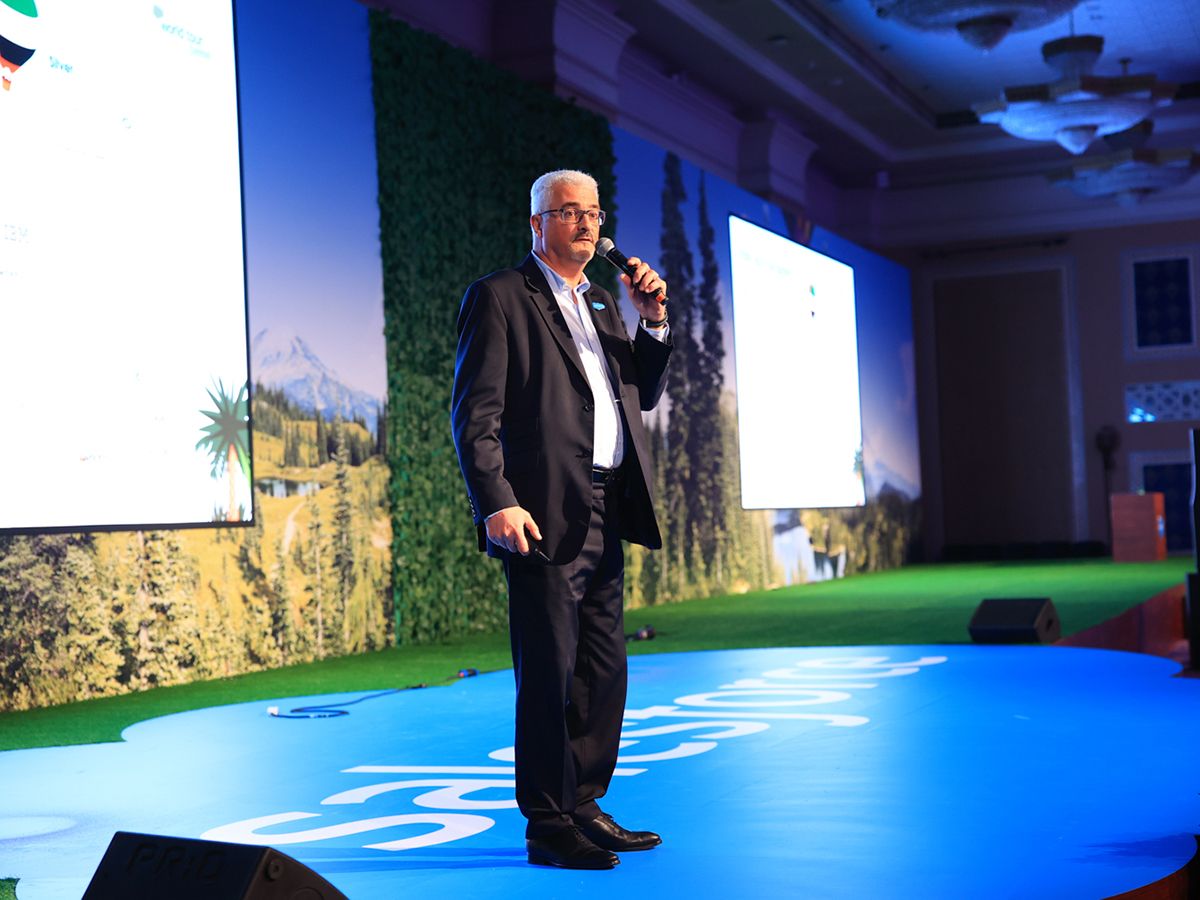
These were among the findings of research done in the region by Salesforce, the global leader in AI Customer Relationship Management (CRM), and highlighted recently at its annual Salesforce World Tour Essentials Dubai event held at Madinat Jumeirah.

This enthusiasm for the latest generation of AI and cloud-based technology was amply evident at the event, which was packed with over 2,000 customers, partners and associates, including senior attendees from government, retail, real estate, energy, and banking sectors in the region.

It’s also clear from the scale of Salesforce’s investments in the region – according to IDC estimates. The company will generate more than $5.1 billion in net new business and create more than 21,800 jobs in the UAE by 2028, fuelled by AI-powered cloud solutions.

“This is a testimony to the importance and visibility of the region to our company,” says Thierry Nicault, Area Vice President, Middle East, Salesforce. “Our team is growing here locally, we are expanding our presence, and there is a huge growth in our ecosystem.”

Image credit: Gulf News

Einstein 1

At the heart of this growth is the newly launched Einstein 1 platform, which embeds Generative AI into workflow processes across all Salesforce applications, including sales, service, marketing, ecommerce and analytics. Data, of course, is at the centre of this revolutionary technology – specifically Data Cloud, a platform that creates a holistic customer view by integrating reams of organisations’ existing, disconnected data, and fuses it with Generative AI to improve both customer engagement and employee productivity.

“Seventy-one per cent of companies in the enterprise space have siloed data, on lots of different systems and models, spread across old and new systems. Einstein 1 allows you to ensure that this data will be actionable in your business,” says Nicault. “The key part is that we’re using Gen AI on your company’s grounded data, which you have built for the past few decades and spent millions to maintain, and not on internet or public domain data.”

The company has agreements with leading data providers such as Snowflake, Google Cloud, AWS, MS Azure, and Databricks to allow such integrations securely. This goldmine of company-specific data combined with Generative AI allows the seamless automation of processes, and the reduction of repetitive tasks which, Salesforce research shows, takes up 62 per cent of employees’ time at present.

“The result is a combination of improved employee productivity and better customer service, bringing a lot of value in terms of the ability to decrease costs while increasing customer satisfaction,” Nicault says.

Making a mark in the Middle East

This increase in efficiency and productivity is the reason for the rapid adoption of such AI and cloud technology in the region, since it matches the UAE’s ‘growth mindset’, explains Nicault.

“The government’s vision to build this country as an economic, tourist and cultural destination is absolutely amazing. Our cloud and AI-powered CRM solutions support this because they are effective across sectors including travel, retail and real estate, and it’s starting to pick up very nicely in healthcare and banking, and the public sector,” he says, adding that local case studies have shown that the platform brings about steady growth without organisations having to increase their workforce thanks to improved productivity.

Need for training

The issue, of course, is that such assimilation of evolving technology can bring with it a skills gap, and according to Salesforce’s research, employers in the UAE have some work to do. Findings show that 52 per cent of workers have not been trained to use Generative AI, and 64 per cent say that employers haven’t set any guidelines for Gen AI usage.

This mismatch between the use of AI and training in AI is among the reasons why Salesforce places such an emphasis on training and education, as demonstrated by its 35 per cent increase in partner certifications and its support for technology skills in the region. “Our job has always been to help democratise technology,” says Nicault. “One way we do that is through our free training website, Trailhead, which allows anybody to learn in-demand skills, earn credentials, and connect to opportunities. The second thing is that we have specific programmes and regular workshops to help our partners up-skill. And thirdly, we are engaging with external organisations and associations such as ArabiaForce Academy, which helps to upskill the Arabic-speaking world.”

It’s also why the company is taking a leadership role in AI through Einstein Trust Layer, a robust set of features and guardrails that protect the privacy and security of organisations’ data, improves the safety and accuracy of their AI results, and promote the responsible use of AI across the Salesforce ecosystem.

“We have taken time to ensure that our Gen AI features and services are accurate and safe to use,” Nicault says. “We may not be seen as the fastest innovator in AI, but we do it fast in the most secure way possible.”

This article originally appeared in Reach by Gulf News. You can find it here

Leave a comment

Filed under Articles, Technology

Launch: GenniusXYZ’s Global Hub in Dubai

Imagine as One reimagines loyalty programmes offering users a centralised secure location

Gennius XYZ, a Florida-based fintech company, recently launched its latest digital platform, Imagine as One, during the grand opening of its Dubai base, the Gennius Global Hub. One currency, one wallet, and one simple way to unify various digital assets and facilitate effortless transactions across boundaries — that is what its latest platform promises consumers in the Middle East and North Africa (Mena).

Supported by Seed Group, a company of The Private Office of Sheikh Saeed Bin Ahmed Al Maktoum, Gennius XYZ released its latest digital platform at The World as One event on May 9 before movers and shakers of the finance industry in the city. Against the glittering backdrop of the Burj Khalifa on the top floor of the upscale The Lana hotel in Business Bay, the event was the perfect setting for the first glimpse of this futuristic technology.

“Today marks a significant milestone as we launch the Gennius Global Hub in Dubai and unveil our The World as One programme,” said Sergio Arana, CEO and Founder of Gennius XYZ at the launch. “This initiative represents not just a step but a giant leap forward in redefining global loyalty systems. The most important part is its philosophy: the unity, the concept of The World as One. Imagine what we can do — how we can mix currencies, wallets, many different assets, and technology to make it simple for consumers.”

Capital of digital strategy

The Gennius XYZ Global Hub comes to Dubai after nearly one year of development and customisation for the market, working closely in partnership with the Seed Group. “We have 17 million users active on the platform worldwide, but at the end of the day, every market, [and] every country is unique,” said Arana.

Calling Dubai ‘the capital of digital strategy’, he expressed gratitude to Hisham Al Gurg, CEO and Co-founder of Seed Group, for giving Gennius XYZ a chance to expand into the region and globally. “We are a small company, but I believed that together we could build something big, something different.”

That belief was the catalyst for the partnership. “A year ago, we facilitated the smooth entry of Gennius XYZ into Dubai and the larger Mena market, which marked the development of its then-project called The World as One. Now here we are, finally witnessing it come to life — which encompasses its latest Imagine as One digital platform — along with the inauguration of its Dubai hub,” said Al Gurg at the launch. “I think we can all agree that there couldn’t be a better headquarters than Dubai. You look at all the government initiatives launched every year, and they speak of one message: Come to Dubai, and we will support you as the government and as Royal Family members and give you all that you need.”

With two decades spent starting and running new ventures in MENA, and investments worth more than $1.06 billion under his belt, Al Gurg speaks from experience. “In our organisation, we always continue to seek the most innovative companies around the world, especially in the fintech sector,” he said. “There are so many companies to choose from, different countries, different founders. It is very challenging for any investor to find a founder with a great concept and great business model who is ready to take the steps to expand internationally.”

Customer-centric ethos

In Arana and the concept of Imagine as One, Seed Group has found that kernel of greatness. “Together, we are setting the foundation for Gennius XYZ’s global expansion, aiming to simplify and enrich the loyalty experience worldwide,” explained Arana. “Our mission is driven by technological innovation and a deep commitment to understanding and fulfilling the daily needs and aspirations of our customers. This collaborative effort is pivotal as we continue to lead and innovate in the dynamic digital landscape.”

Welcoming Gennius XYZ Global Hub to the city, Akshay Chopra of the MENA Fintech Association said, “Gennius XYZ is pioneering advancements by making loyalty and reward programmes not only interoperable but profoundly portable. This transformation breaks down the traditional barriers that have restricted the utility of digital assets, ensuring they are more accessible and adaptable for users across the globe.”

That is at the heart of the Imagine as One platform. Powered by a pioneering AI concierge service, AlleX navigator and featuring the latest in immersive technology, it allows customers to access assets — whether it is money used for in-app purchases in games such as Fortnite, miles earned on airlines, rewards earned on credit cards, or hotel stays — and transfer them seamlessly between these different platforms, to be used at the user’s convenience.

“We build our technology infrastructure to blend all of it into one transaction, to create interactions between the different environments with the same user feel,” explained Arana. “So you have one currency and one super-wallet connected across assets, and that gives you more power because if you can mix your different assets, you have more purchasing power. And you can spend it normally, as every day. Whether you are going to a supermarket or a restaurant, or purchasing online or gaming in Web 3.0, whatever your life is, we will be there.”

Imagine as One is hyper-connected with all major e-wallets, including Apple Pay, Google Pay, PayPal, Alipay, and all significant cryptocurrency wallets in the Web 3.0 realm. This integration offers unprecedented convenience, allowing consumers to manage their finances and loyalty benefits in one centralised, secure location.

Soul of Argentina

The event ended on a soaring note, as Arana unveiled the final surprise of the evening: the new ambassador for its platform, well-known Argentinian folk singer Soledad ‘La Sole’ Pastorutti. The theme of unity and The World as One came together perfectly in her soulful performance of John Lennon’s Imagine, the inspiration behind the name of the platform, accompanied by the simple strains of piano, and with Dubai’s skyline gleaming in the background.

This article appeared originally in Reach by Gulf News. You can find it here

Leave a comment

Filed under Articles, Technology

Interview with… Ghada Sawalmah

Image credit: Gulf News

The private sector is set to play a crucial role in the growth of Dubai’s dynamic and rapidly developing healthcare industry, says Ghada Sawalmah, CEO of Gargash Hospital.

“Since private hospitals are the primary investors, it is likely that the healthcare sector will experience growth driven by private hospitals in the future,” she explains. “We anticipate an increase in the number of private hospitals entering the market to take a share of the pie.”

According to current projections by the Dubai Healthcare City Authority, the UAE’s expenditure on healthcare is set to rise to Dh126 billion by 2027, with spending by the private sector growing at a projected CAGR of 8.8 per cent, compared to a CAGR of 7.5 per cent for the public sector.

Gargash Hospital is part of this burgeoning ecosystem of private hospitals, becoming the first female-owned and -led hospital in the country when it opened the doors just before the start of the COVID-19 pandemic. But Sawalmah’s understanding of the healthcare business stretches much further back – to her childhood, growing up as the daughter of two doctors, and watching her mother, Dr Husnia Gargash’s trailblazing journey as the country’s foremost fertility expert.

“I would often go to the clinics and hospitals where they worked since I was very young. I used to carefully watch my parents and their coworkers and how their actions affected the patients,” she recalls. “Being raised in a household of entrepreneurs allowed me to cultivate and enhance my business skills as well. I came to understand that my interest lay more in overseeing the business side of healthcare rather than practising as a doctor.”

The pandemic effect

That deep-seated knowledge helped Sawalmah steer the hospital through the difficult Covid years. “As a new hospital, we had to make numerous changes to our patient flow, employee management, and facility management,” she explains. “The pandemic proved to us that survival was a team sport, not only within the hospital but also within the healthcare community in Dubai. Sharing of knowledge, equipment, human resources, and PPEs was the need of the hour, and everyone stepped up to the task.”

The remarkable response to the pandemic by the UAE is one of the key reasons for the projected growth in the private healthcare sector in the upcoming years, believes Sawalmah. “After the pandemic, there has been a rise in the number of people visiting the UAE, whether for tourism or employment purposes. A significant factor for this increase is the swift and effective management of the pandemic by the UAE government.”

According to government estimates, the population of Dubai is predicted to reach 5.8 million by 2040, and when it comes to medical tourism, the UAE and Dubai, in particular, tops the list as the number one destination in the region. In 2022, the emirate received a record 674,000 medical tourists from Asia, Europe and the Middle East and North Africa, who spent Dh992 million, an increase of Dh262 million from 2021.

“This indicates that a larger number of healthcare facilities will be needed to cater to the healthcare needs of the increasing population and medical visitors,” says Sawalmah. “There will be a rise in the use of new technologies and the creation of Centres of Excellence (CoE) to draw in medical tourists. The current players will either enhance their range of services or establish strategic collaborations to grow their patient base.”

Developing such strategic collaborations is the focus of Gargash Hospital’s own evolution in the near future, including major partnerships with the likes of Tarabichi Stammberger Day Surgical Center, Swift Day Surgical Center and BritishCare. “We aim to establish ourselves as strategic allies and collaborate with other healthcare professionals to offer top-notch healthcare services to our patients,” she says.

Digital healthcare

At the heart of all this development is, of course, technology. Driven by the learnings from the COVID-19 crisis, the UAE’s digital healthcare market is projected to grow from $1.06 billion (Dh3.67 billion) in 2022 to $4.42 billion by 2030, a CAGR of a whopping 19.6 per cent, according to recent industry estimates.

However, this rapid growth and assimilation of new technologies comes with a unique set of challenges for private healthcare providers, who need to juggle the costs of the technology with shifting government regulations.

“The most recent technologies demand significant financial investments for acquisition as well as implementation,” she says. “Another obstacle is combining the latest technology with the current healthcare information system (HIS), which may involve upgrading or modifying the existing HIS, resulting in additional expenses. The regulatory requirements for digital healthcare and new technologies are always changing.”

This article originally appeared in the Gulf News. You can find it here

Leave a comment

Filed under Articles, Health

Interview with… Salem Bawazir

Photo credit: Anas Thacharpadikkal | Gulf News

Salem Bawazir, the first person of determination to be hired at Expo 2020, and the man who led the inclusion programme at that global event, has a very simple but powerful mantra for success: To see the positive in every situation, and to use the negativity that comes his way as fuel to propel himself forward.

Diagnosed with cerebral palsy as a child, the 50-year-old Emirati has spent most of his life in a wheelchair. But the biggest challenge he’s faced while trying to build a career for himself hasn’t come from physical limitations; it has come from the societal stigmas towards people with disabilities.

“There still lies a fundamental ignorance and lack of awareness of the capabilities and potential of people of determination,” he says. “This persistent societal attitude makes finding a job and having a successful career a daunting task.”

A rough ride

Entirely self-taught, he began his career at 33 as a community coordinator with a book retailer, an employment made simpler, he says, by the fact that Federal Law No. 29 of 2006 made it mandatory for companies to hire people with disabilities.

But when it was time for him to look for a new position five years later, Bawazir faced rejection from employers that left him in tears after an interview.

“A prospective employer asked me as to why I should be hired if I couldn’t even move my hands,” he recalls. “There was a question mark raised on the value that I could bring to the organisation. A lot of employers refused to hire me, and there were companies that didn’t even bother responding to my job applications.”

Undeterred Bawazir soldiered on – a stint as an HR coordinator followed, something he gave up in an attempt at forging a future as an entrepreneur. He put in a seed capital of Dh150,000 to start his own graphic design company. That initiative too ran aground, when an SME fund created to support entrepreneurial ideas like his, refused to support him with the financing required. “They didn’t believe in my ability to run my own business,” he says. It was once again a cruel reminder of how society was judging people like him, “not on ability, but on disability”. With these kind of experiences, a number of people would have just given up. Not Bawazir.

Making history

2020 heralded a turnaround when Expo rolled into Dubai. With the UAE’s renewed commitment to empower people of determination, Bawazir found himself uniquely positioned to lead the inclusion programme at Expo 2020. It was an opportunity that allowed him to work with the accessibility, health and safety, information and future technology, and construction partners at the event to ensure that people like him could make the most of the experience. In his capacity not only could he recruit and train people with disabilities, but his unwavering dedication to work helped him raise awareness about them.

“As the first person of determination to be hired at Expo 2020, I made history,” he says proudly. “I hope that it will inspire others to follow in my footsteps and break down barriers of their own.”

For Bawazir himself, the job at Expo meant that he was now more confident in the face of challenges, and there continued to be many. Ten months post Expo 2020, he struggled to find employment, but his resilience and never-say-die attitude finally paid off. Impressed by his confidence, his curiosity and a willingness to learn, a leading UAE organisation offered him his current job with the Learning and Development team in its HR department.

An inclusive future

Today Bawazir brims with positivity and hope for the future. A future, where he wants to rekindle his entrepreneurial calling, a business of his own. This time around, he will do it without any external funding, he says with a smile.

“My goal is to change people’s thoughts and beliefs, and to help a new generation embrace the principles of equality and equity for all.”

The article originally appeared in Reach by Gulf News. You can find it here

Leave a comment

Filed under Articles, Inclusion, People

Interview with… Dr. Khaled Awad

CMC Hospital treats tachycardia in a dextro-transposed heart with multiple ablations

It was a case no one else was ready to take on – a heart condition so rare that even the Mayo Clinic has recorded just 30 cases in the past 20 years – and a patient with a history of going into cardiac arrest during surgical procedures. But for Dr Khaled Awad, Electrophysiologist and Interventional Cardiologist at Clemenceau Medical Center Hospital (CMC Hospital), it was a chance to give a woman her life back.

“Everybody was telling her, ‘we can’t do it’, but she was really suffering,” says Dr. Awad. “For years, even with high dosages of anti-arrhythmia drugs, she would have a heart rate going up to 180 for many hours, every couple of days.” For people with her condition, this was potentially life-threatening, he says, because it could trigger sudden cardiac death.

Born with dextro-transposition – a rare congenital heart defect where the position of the pulmonary artery and aorta are swapped – and the survivor of open-heart surgery as an infant, this 36-year-old woman from Saudi Arabia is a medical rarity for the simple reason that most born with this condition don’t live long, passing away due to heart failure. It took the doctors at CMC Hospital three weeks of preparation, reading the sparse medical literature and doing imaging scans before taking on this “once-in-a-lifetime case”, doing a tricky three-hour procedure involving multiple ablations – introducing a catheter into her blood vessel, and using heat or cold energy to create burns on the heart to stop the electrical signals causing the tachycardia.

“One week later, she is off medications, doing well and happy to live,” says Dr Awad. “She will be able to watch her daughter go off to university, where she plans to study to become a doctor, perhaps even a cardiologist!”

This and other cutting-edge procedures are the mainstay of the Electrophysiology and Pacemaker Clinic in Dubai at CMC Hospital – one of the few such specialised clinics in the city for the treatment of all disorders of heart rhythms. These include the implantation of sophisticated Cardiac Resynchronization Therapy (CRT) devices to prevent heart failure, and the latest therapies such as Conduction System Pacing (CSP), a revolutionary treatment where the pacemaker closely mimics the natural physiological pacing of the heart, considerably reducing adverse outcomes – done two months ago at CMC.

“To the best of my knowledge, this is the first time it has been done at a private hospital in the entire MENA region,” says Dr Awad, one of only eight specialised electrophysiologists in the UAE.

Growing word of mouth means that the clinic has patients coming to them from different countries such as Pakistan and Lebanon for treatment. The reason is that electrophysiology – the study of the electrical impulses governing heart rhythms – as a specialised discipline is relatively new. Often, it is interventional cardiologists who deal with these devices and procedures, and they might lack the expertise to do so.

“There are a lot of young people who have a pacemaker put in, even when the indication was not correct. It hurts me when I see them,” Dr Awad says, adding that it could mean multiple procedures to maintain or replace the device during their lifetime. “An electrophysiologist has special training and perspective, and we might not see the indication for a pacemaker or an intervention at all.”

Access to specialists of this sort is especially crucial because these procedures are so very sophisticated and delicate. “Everything in electrophysiology is about millimetres; if you’re millimetres away during an ablation, you could damage or perforate the heart,” he says.

This is clearly a specialty that is set to grow in this region in the near future, and the Electrophysiology and Pacemaker Clinic at CMC Hospital is right at the forefront of this change.

This article originally appeared in the Gulf News. You can find it here.

Leave a comment

Filed under Articles, Health

Interview with… Circa Biotech

Company forays into uncharted territory to build a circular food waste management solution

Image credit:  Stefan Lindeque | Special to Reach by Gulf News

When you are building a pioneering biotechnology company, you have to build the very path to walk on. That is what three UAE-based entrepreneurs discovered when they began Circa Biotech, an innovative start-up that upcycles food waste into high-quality animal feed using industrial insect farming – the first of its kind in the region.

In order for Dr Haythem Riahi, CEO of Circa Biotech, and his co-founders, Kristine Wong and Liudmila Prozorova, to see their vision of sustainability come to life, they had to relentlessly draw courage and inspiration from their belief in the project. There was no legislative precedent for the sort of industrial insect farming they had in mind – feeding the indigenous Black Soldier Fly larvae with organic food waste redirected from landfills, harvesting the larvae after a short 14-day period to generate high-quality protein feed for fish and poultry, and then creating organic fertiliser from their by-products.

For them to even begin operations at Masdar City in Abu Dhabi, a new category of operating licence had to be created, and they needed to convince several governmental bodies – the Ministry of Environment, Environment Agency – Abu Dhabi, Abu Dhabi Agriculture and Food Safety Authority – that their insect farming was not harmful for the environment or people.

That was just the beginning – they still needed companies to invest in what was then perceived as a crazy idea. “We were laughed at, so many times,” recalls Riahi. But that didn’t stop them. “The three of us are PhDs with MBAs,” he says. “But the first quality we share is resilience.”

Passion for sustainability

What kept them going was their dedication to making the world a better place for future generations. For Riahi, that determination stemmed from becoming a father, and realising that a planet struggling with climate change and food shortage cannot be his children’s legacy.

“By 2050 – in just 27 years – the world will be lacking 200 million tons of protein for animal feed, and we will not be able to feed the 10 billion people on the planet,” he explains. “We all need to become passionate about sustainability, about the way we live, produce and eat.”

That passion gave the three founders the courage to take the leap of faith needed to give up their corporate jobs and transition into entrepreneurship. And slowly but surely, their work began to be noticed.

Moment of glory

The moment they knew that they were truly on the path to success was when Mariam bint Mohammed Almheiri, Minister of Climate Change and Environment, inaugurated their facility in 2022, signing a Memorandum of Understanding (MoU) and pledging her support. It was a reaffirmation that the company was aligned with the UAE’s food security strategy for the next 20 years.

“Our first KPI is not what we are generating in revenue; it is zero food waste,” says Riahi. “We don’t want to see any more food dumped in landfills, causing harmful methane emissions.”

Towards a better tomorrow

To that end, Circa Biotech aims to upscale its industrial capacity to produce 22,000 tons of animal feed a year by processing 200 tons of food waste a day, placing it in the top 10 companies in the world when it comes to alternative food protein.

“Today, the UAE is number four globally when it comes to food waste,” he says. “We want to go from that to making the UAE one of the top five sources of alternative protein in the coming five years.

“The solution will not come only from us. We were licence number 1 in this field of activity; now it’s open to others to come and operate in the sphere.”

For these trailblazers, that would be the greatest achievement – to see an entire ecosystem of start-ups and SMEs in the UAE follow them along the path they have built towards a sustainable future, paved with passion, belief and resilience.

This article originally appeared in Reach by Gulf News. You can find it here.

Leave a comment

Filed under Articles, dubai, People, Sustainability